
Before you take on a bigger job for a new client (serious materials, a long programme, or work that will keep coming), there are two questions worth answering. Can this client be trusted to pay? And who is the contract actually with?
They sound like the same question, but they aren't. The person who rang you, walked the site with you and accepted your quote isn't necessarily the party you end up contracting with, especially when the work has been arranged through an intermediary. Both questions are much easier to answer before the job starts than once an invoice is overdue and the people involved have stopped returning calls.
Who Is the Contract Actually With?
The business you've been dealing with could be a limited company, a sole trader, or someone arranging the work on behalf of another party. Each of those puts responsibility for paying your invoices in a different place.
If you're contracting with a sole trader, the person is responsible for paying you. If you're contracting with a limited company, that responsibility generally sits with the company rather than the director behind it, unless there's a personal guarantee in place. And the entity paying your invoices isn't necessarily the one you contracted with. If a related company has been paying you and the contracting company later can't, those earlier payments don't generally make the related company responsible for paying the rest.
Intermediaries add another layer. If it isn't clear at the time you're engaged who is actually engaging you, you can sometimes find out later that your contract was with the intermediary and not the company you thought you were working for.
That's why the most important thing is to keep a record of who accepted your quote and in what capacity they accepted it: as a director of a named company, on their own account, or on behalf of someone else. Check the legal name of any company involved against the register at the same time.
We're pretty good at working back through the history of a matter to establish who the actual parties to a contract were. But it's better for you to know up front, so there are no surprises later.
How Established Is the Company?
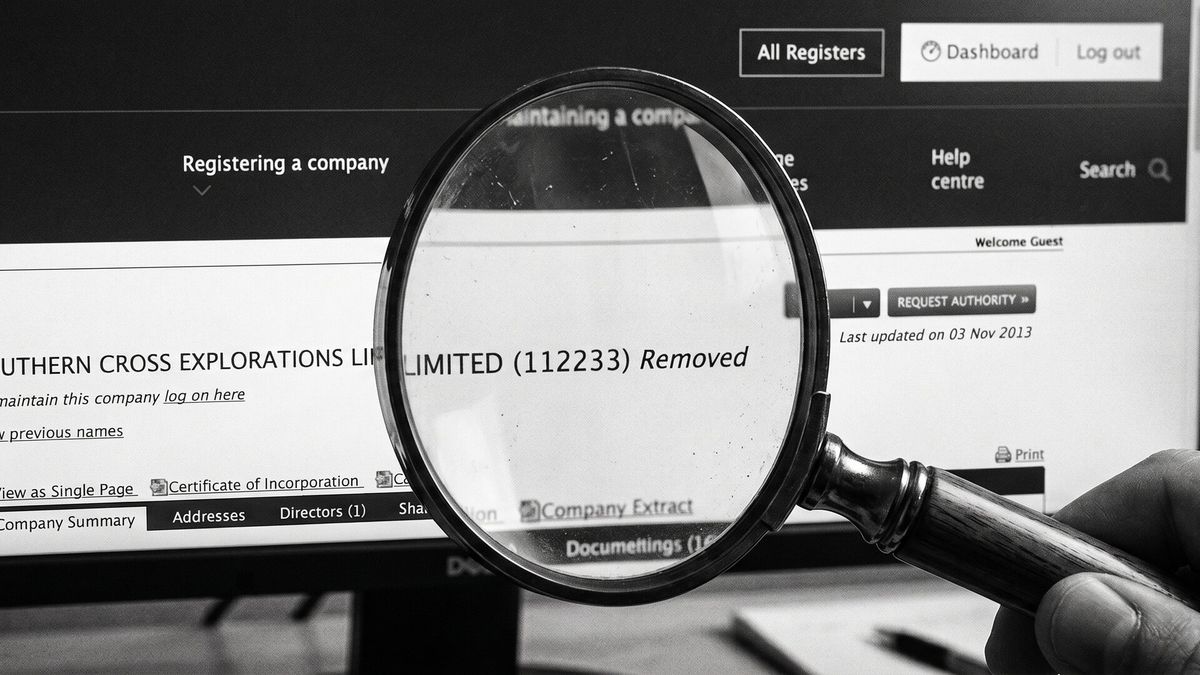
The other question, whether the client can be trusted to pay, is where the Companies register earns its keep.
The register shows when a company was incorporated and what it has filed since. Every company has to file an annual return each year, so a return that's overdue is visible to anyone who looks.
None of this proves anything by itself. Plenty of good businesses are young companies, and new companies get formed for perfectly sound reasons. One thing not to read too much into is a registered office at the accountant's address, which is normal for small companies. But a company formed only a few months ago asking you to carry serious cost is worth weighing before you commit, and so is an established company that has stopped keeping its annual returns up to date.
What Else Does the Director Run?
You can search the register by a director's name and see the other companies they're connected to. Two or three isn't unusual. A dozen, especially if some have stopped trading or changed names, is a pattern worth understanding before you let a bill run.
It isn't proof of anything on its own. Some people run several companies for legitimate structural reasons, separating property, plant and trading. It might also give you an idea of whether the company engaging you is the one holding the assets. Property developers often have a separate company that owns the property being developed from the one that is managing the development process. Either way, it changes the conversation, and that conversation is better had before your team are working on site.
Has Anything Changed Recently?
Look at the recent history: name changes, new directors, shareholding transfers. In the months before you're brought onto a job, those can reflect a restructure, an owner getting ready to exit, or something else that might be worth a chat about.
One pattern worth knowing is an older company whose directors and shareholders all changed on the same day. That can be a business bought as a ready-made vehicle. Its incorporation date says "established", but the people running it may have arrived last month, and the trading history on the register belongs to somebody else.
On Bigger Contracts, Go Further
Doing the work before you're paid for it is providing credit, whether or not you call it that. On bigger contracts, two further checks are worth considering.
The Personal Property Securities Register (PPSR) records security interests over personal property: vehicles, plant, equipment, stock and receivables. A search shows whether a lender or supplier already has security registered over the company's assets, which tells you who would likely get paid from those assets before you if things went south.
A registration isn't a red flag by itself as registrations are very common for most trade related credit or lending. A string of finance companies registered over recent model vehicles can tell a different story though.
A commercial credit check adds a different angle: how the company has been paying its other suppliers, and whether defaults or judgments are recorded against it. It's only as complete as the information reported to the bureau, but it's the closest thing you'll get to a reference from people who have already given them credit without speaking to them directly.
Five Minutes, Not a Forensic Audit
None of this is about treating new clients as suspects, and a clean set of checks is no guarantee you'll be paid. What the checks do is give you a chance to spot the obvious problems while you still have options: a bigger up front deposit, tighter payment terms, a personal guarantee, or deciding the job isn't worth the exposure.
All of those are much easier to raise before work starts than after an invoice is overdue.